


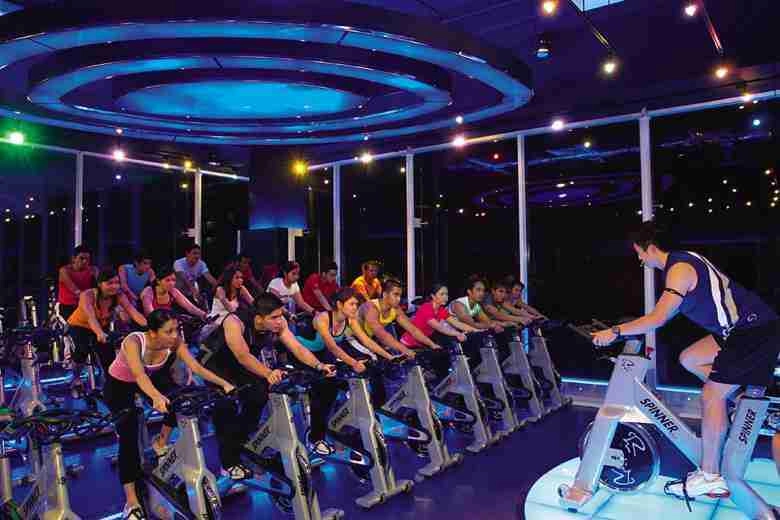
Exercise is often sold to professionals as a guaranteed productivity enhancer. The claim is too simple. A well-dosed ride may improve mood, create separation from work and support long-term health. A poorly placed interval session can leave the legs heavy, delay sleep, compress meal timing and add one more stressor before a presentation or negotiation.
The scheduling problem is not whether indoor cycling Singapore is “good for work”. It is how to place a specific cycling dose inside a week that already contains cognitive load, emotional pressure, commuting, travel and incomplete recovery. The right framework is fatigue budgeting. Training spends physical and attentional resources, while recovery restores them. High-stakes work also spends from the same broader reserve, even when the muscles are not involved.
Classify the Workday Before Scheduling the Workout
Calendar density alone does not reveal demand. A day with eight familiar internal meetings may be less taxing than one 20-minute board presentation. Divide workdays into three categories.
Performance-Critical Days
These include major pitches, public speaking, live media, difficult negotiations, examinations, interviews and decisions with material consequences. The priority is predictable energy and emotional regulation. Training should support readiness rather than compete with it.
Cognitively Dense Days
These involve sustained analysis, writing, design, coding, financial modelling or back-to-back problem solving. The risk is not necessarily acute anxiety. It is attentional depletion and delayed eating, followed by an evening workout attempted with low fuel and high mental fatigue.
Routine or Flexible Days
These contain work that can tolerate normal fluctuations in energy or scheduling. They are the best candidates for demanding intervals because the professional cost of an imperfect recovery response is lower.
This classification should happen before choosing class intensity. Booking a high-intensity session and then trying to force the work calendar around it reverses the decision sequence.
Separate Training Fatigue From General Stress
Training load has external and internal components. External load is the work completed, such as interval duration, cadence, resistance or power. Internal load is the cost to the rider, reflected by heart rate, RPE, soreness, sleep disruption and mood.
Two professionals can complete the same class and carry different fatigue into the office. The rider who slept seven and a half hours, ate normally and has a light commute may absorb the session well. The rider who crossed time zones, skipped dinner and has a 7 a.m. client call may experience a much higher internal load.
This is why a class label cannot determine scheduling by itself. “High intensity” describes the intended session, not the individual cost on that day. Use recent sleep, appetite, muscle heaviness, resting heart-rate trend where available, motivation and warm-up response to estimate the current price.
What to Do Before a High-Stakes Morning
The evening before a critical morning is rarely the best time for an unusually hard or unfamiliar cycling session. The downside is not that all evening exercise ruins sleep. Research is mixed and individual response varies. However, a large observational study of evening exercise reported that more strenuous exercise ending closer to bedtime was associated with greater disruption to subsequent sleep and nocturnal autonomic recovery. The practical implication is modest: avoid using the night before an important event to test your tolerance.
Choose one of three options:
- Complete a familiar easy-to-moderate ride and finish with ample wind-down time.
- Move the hard session 24 to 48 hours earlier.
- Rest, especially if the preceding week already contains high training or work strain.
The goal is not maximal freshness at all times. It is reducing avoidable variance before a day when performance matters.
Morning Training Before an Important Afternoon
A morning ride may fit well before an afternoon presentation if the dose is controlled and the logistics are protected. The main risks are time compression, inadequate refuelling and residual arousal.
Keep the session familiar. A technique or aerobic ride is easier to budget than repeated maximal intervals. Allow enough time for a complete cool-down, shower, breakfast and travel without rushing. If the session ends and the first meeting starts 15 minutes later, the schedule has removed the transition that made training useful.
Test the pattern on a lower-stakes day first. Note whether concentration improves, remains neutral or declines two to four hours later. Personal data is more valuable than a generic claim that morning exercise always improves focus.
Training After the Event Can Be a Release or a Second Stressor
After a presentation or negotiation, riders often want a hard class to “burn off” stress. Sometimes this works. Sometimes the nervous system is already highly activated, eating has been irregular and the session becomes another performance demand.
Use the warm-up as a decision gate. At ten minutes, ask:
- Does cadence feel coordinated?
- Is a familiar resistance unusually difficult?
- Is breathing disproportionate to the load?
- Do you feel calmer as you move, or more agitated?
- Have you eaten and hydrated adequately for the planned intensity?
If the answers point toward poor readiness, keep the class but scale the intervals. Reducing resistance, staying seated or capping RPE can preserve the habit without purchasing unnecessary fatigue.
Build a Weekly Fatigue Budget
A useful week has anchors and flex points. Anchors are high-stakes work events and the training sessions most important to the programme. Flex points are sessions whose timing or intensity can change without damaging progress.
Start with work anchors. Place the hardest cycling session where there is recovery space on both sides. Add a second quality session only if it does not collide with another critical event. Fill remaining days with easier aerobic work, strength training, mobility or rest as appropriate.
For example, if Tuesday contains a board presentation and Thursday contains a client workshop, Monday night should not automatically hold exhaustive intervals. A more robust pattern may be an easy ride Monday, quality cycling Tuesday evening if readiness is good, recovery Wednesday, then another quality session Friday or Saturday. The exact design depends on the rider, but the sequencing logic remains stable.
Avoid counting only hard workouts. A late flight, networking dinner, early call and long commute all consume recovery capacity. Put them on the same planning page as training.
Use Three Session Versions
Professionals benefit from pre-authorised alternatives because tired people make poor decisions. For each booked class, define three versions.
Full Version
Complete the intended intervals when sleep, fuelling, warm-up response and work strain are within the normal range.
Reduced Version
Keep the session structure but reduce power or resistance, remain seated for selected climbs, or cap RPE one to two points lower. This suits days when readiness is imperfect but movement still feels constructive.
Recovery Version
Ride easily, focus on smooth technique and ignore competitive cues. If even easy work feels wrong or symptoms are present, stop. The recovery version is not a failed workout. It is a planned tool for maintaining consistency while protecting the next important output.
Deciding these versions in advance prevents ego from controlling the class.
Protect the Recovery Logistics
The workout occupies only part of the schedule. The recovery chain includes transport, cooling, fluid, food and sleep. A 60-minute class that creates a three-hour delay to dinner may be more disruptive than a 45-minute ride with an immediate meal.
Pack work clothes, post-session food and hydration before the day starts. Avoid using a critical workday to try a new pre-workout product or aggressive caffeine dose. If evening training is necessary, choose a class time that still permits a normal wind-down. Research on exercise timing does not support one universal curfew, so personal sleep response should guide the margin.
Track bedtime, estimated sleep onset, next-morning alertness and session intensity for two to three weeks. This identifies whether late hard rides are actually a problem for you rather than relying on assumption.
Measure Professional Readiness Separately
Workout performance and work performance are related but not interchangeable. Record a simple professional readiness score on high-demand days: concentration, emotional steadiness and afternoon energy, each rated from one to five. Compare this with session timing, intensity and sleep.
Patterns may show that moderate morning cycling helps presentation days, while late intervals reduce next-morning sharpness. Another rider may find the reverse. The purpose is not to prove causation from a small log. It is to spot repeatable scheduling friction.
The range of spin formats at TFX Singapore includes endurance, power, hills, sprints, interval work and technique-focused options. That makes intensity selection possible within the same training modality. The calendar should determine which tool fits, not whether cycling happens at all.
Consistency Comes From Intelligent Variation
Professionals do not need a plan that works only during quiet weeks. They need a plan that survives deadlines. Fatigue budgeting makes that possible by protecting performance-critical days, placing demanding sessions where they can be absorbed and preserving reduced options when readiness changes.
The strongest schedule does not maximise intensity. It minimises conflict between valuable outputs. Work and training can both progress when neither is allowed to consume every available resource.
Frequently Asked Questions
Should I avoid indoor cycling on the day of a major presentation?
Not necessarily. A familiar easy or moderate ride may fit well, especially if tested previously. Avoid unfamiliar, exhaustive or logistically rushed sessions when the cost is uncertain.
Is morning or evening cycling better for demanding work?
There is no universal winner. Choose based on sleep response, meal timing, commute and the timing of the critical task. Test the pattern on lower-stakes days before relying on it.
How should I modify a class after a stressful workday?
Use the warm-up to assess coordination, breathing and perceived effort. Reduce resistance, remain seated or cap RPE if the familiar load feels unusually expensive. Stop if symptoms or pain develop.
Will an easy session reduce my training progress?
One scaled session will not erase progress. Repeatedly forcing hard work into poor-readiness days may be more disruptive because it can compromise sleep, technique and the quality of later sessions.