


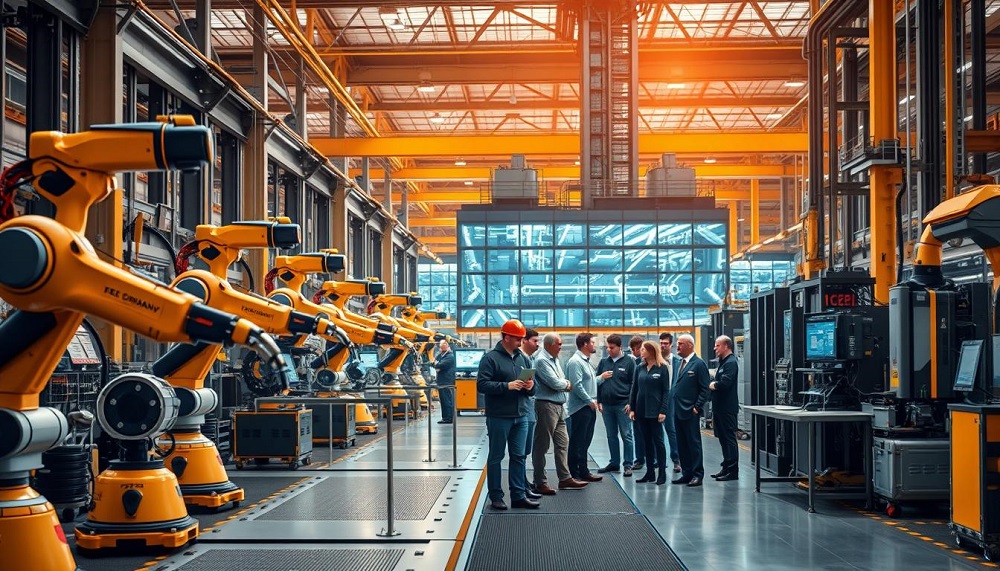
The global industrial landscape is experiencing a profound structural shift. Driven by rapid technological advancement, demographic changes, and evolving operational models, the modern industrial workforce looks fundamentally different than it did just a decade ago. Manufacturing, logistics, energy, and construction sectors are moving away from traditional, labor-intensive operations toward high-tech ecosystems powered by automation, data analytics, and human-machine collaboration.
Workforce transformation is no longer just a human resources trend. It has become a primary driver of industrial growth, operational resilience, and market competitiveness. Organizations that successfully adapt their workforce strategies to match technological progress are achieving higher productivity, improved safety standards, and greater organizational agility. Conversely, those clinging to legacy staffing models face severe labor shortages, rising operational costs, and declining market share.
The Drivers of Industrial Workforce Transformation
Several converging macroeconomic and technological factors are reshaping the industrial talent landscape. Understanding these drivers is essential for business leaders aiming to build resilient operational strategies.
Accelerated Technological Integration
The rise of Industry 4.0 infrastructure—including the Industrial Internet of Things, robotics, cloud computing, and advanced analytics—has altered daily industrial routines. Physical labor is increasingly complemented or replaced by automated systems, requiring frontline workers to possess digital literacy and data interpretation capabilities alongside traditional mechanical skills.
Demographics and the Widening Skills Gap
Industries worldwide face an unprecedented demographic challenge as experienced, veteran workers reach retirement age. The departure of skilled technicians, machinists, and plant managers leaves a significant knowledge deficit. At the same time, attracting younger generations into industrial careers requires breaking old perceptions of shop-floor labor and offering technology-centric career paths with clear growth trajectories.
The Shift Toward Hybrid and Remote Operational Models
While physical presence remains necessary for heavy manufacturing and construction execution, remote operation technologies have matured rapidly. Control room operators, field service engineers, and quality assurance specialists now frequently utilize remote diagnostics, digital twins, and virtual collaboration tools to manage facilities from central locations, expanding the geographical reach of specialist talent.
Strategic Upskilling and Reskilling Initiatives
As job requirements change, organizations are realizing that hiring new talent for every specialized skill gap is neither cost-effective nor sustainable. Internal workforce development has become the cornerstone of modern industrial strategy.
Building Digital Capability Across the Frontline
Upskilling programs focus on transforming traditional operators into tech-enabled frontline workers. Training initiatives cover a broad spectrum of digital skills, including:
- Operating computer-numerical-control machinery and robotic equipment
- Interacting with enterprise resource planning and manufacturing execution systems
- Utilizing augmented reality headsets for complex equipment maintenance and repair
- Analyzing real-time telemetry data to optimize machine performance and energy efficiency
Cross-Functional Knowledge Transfer
To prevent critical operational knowledge from walking out the door with retiring employees, forward-thinking industrial firms are formalizing knowledge capture processes. Mentorship programs, video-based standard operating procedure libraries, and AI-assisted troubleshooting databases ensure that decades of practical expertise remain accessible to incoming staff.
Establishing Continuous Learning Frameworks
Industrial technology evolves far too fast for one-time training programs to suffice. Leading companies integrate continuous learning directly into daily operations, leveraging micro-learning modules and digital simulations that allow workers to practice complex safety and operational protocols in risk-free virtual environments.
Human-Machine Collaboration and Operational Efficiency
The goal of workforce transformation is not to replace human labor with machines, but to augment human capabilities. The synergy between human intelligence and mechanical precision is unlocking unprecedented levels of operational output.
The Rise of Cobots and Automated Assistance
Collaborative robots, or cobots, work directly alongside human operators on assembly lines and in fulfillment centers. Unlike traditional industrial robots that operate inside safety cages, cobots handle repetitive, physically demanding, or dangerous tasks while human workers focus on quality inspection, complex assembly, and process optimization. This division of labor reduces workplace injuries while increasing throughput speed.
Predictive Maintenance and Augmented Diagnostics
Maintenance teams are shifting from reactive repairs to predictive maintenance models. Technicians equipped with smart tablets and predictive analytics tools receive automated alerts about potential mechanical failures long before a breakdown occurs. Guided diagnostic software walks technicians step-by-step through complex repair workflows, reducing mean time to repair and minimizing costly factory downtime.
Data-Driven Decision-Making at Every Level
Modern industrial facilities generate vast amounts of operational data. Transforming frontline staff into data-informed decision-makers allows issues to be addressed at the source. Plant floor operators who monitor performance dashboards can make immediate adjustments to machine settings, optimizing production flow without waiting for multi-level supervisory approvals.
Organizational Culture and Talent Retention
Attracting and retaining talent in the modern industrial sector requires a cultural evolution. Compensation remains vital, but today’s workforce prioritizes safety, career progression, flexibility, and strong organizational values.
Prioritizing Workplace Safety and Ergonomics
Technological integration directly enhances worker well-being. Wearable sensors monitor fatigue levels, core body temperatures, and ergonomic stress, alerting workers before injuries occur. Automated material handling equipment removes heavy lifting requirements, prolonging the career longevity of industrial personnel and creating safer work environments.
Flexible Scheduling and Modern Workplace Perks
Industrial employers are rethinking traditional rigid shift schedules. Implementing flexible shift swaps, predictable rotation schedules, and compressed workweeks helps industrial companies compete with tech and service sectors for top-tier talent.
Clear Career Pathways and Continuous Growth
Retention rates spike when organizations establish transparent internal advancement tracks. Employees who see clear connections between acquiring new technical certifications and earning higher compensation are far more likely to remain with an employer long term, reducing costly turnover and recruitment overhead.
The Broader Macroeconomic Impact on Industrial Growth
The transformation of the industrial workforce generates compounding economic benefits across global supply chains and regional industrial hubs.
Enhanced Agility in Supply Chain Management
A highly skilled, digitally fluent workforce allows manufacturing networks to adapt rapidly to supply chain disruptions. Tech-enabled workers can reconfigure production lines, adapt to material swaps, and update inventory systems swiftly, ensuring business continuity during market turbulence.
Reshoring and Nearshoring Capabilities
Advanced workforce capabilities enable developed economies to bring manufacturing operations back closer to domestic markets. While higher labor costs historically drove production overseas, highly automated, worker-augmented domestic facilities can achieve cost parity through efficiency, superior product quality, and drastically reduced shipping lead times.
Sustainable Industrial Operations
Achieving corporate sustainability targets relies heavily on frontline execution. Trained workers who understand resource conservation protocols, energy management software, and waste reduction methodologies drive meaningful progress toward zero-emission and circular economy goals.
Frequently Asked Questions
How does workforce transformation directly impact a manufacturing company’s bottom line?
Workforce transformation directly improves financial performance by reducing equipment downtime, lowering scrap rates, and increasing overall labor efficiency. Upskilled workers leverage predictive technology to fix issues before costly breakdowns occur, while streamlined workflows allow facilities to output higher volumes without proportional increases in overhead or error remediation expenses.
What is the primary barrier industrial companies face when implementing workforce upskilling programs?
The primary barrier is often operational friction, specifically balancing immediate production demands with time required for employee training. Pulling technicians off the factory floor for instruction can temporarily reduce throughput. Successful companies overcome this by implementing short, modular digital learning programs integrated directly into daily work shifts.
How does the integration of Industry 4.0 technology affect traditional trade apprenticeships?
Industry 4.0 technology expands traditional trade apprenticeships by merging core mechanical and electrical concepts with software, sensor technology, and data analytics. Modern apprentices learn standard fabrication, welding, or electrical work alongside programming, robotics operation, and digital diagnostic troubleshooting.
What strategies can small and medium-sized industrial enterprises use to compete for tech talent against large corporations?
Small and medium enterprises can compete by offering greater role flexibility, faster internal career progression, and closer involvement in decision-making processes. Additionally, smaller firms can partner with local technical colleges and regional trade organizations to build direct recruitment pipelines and share training infrastructure costs.
How do wearable technologies contribute to frontline worker performance and safety?
Wearable technologies, such as smart vests, biometric bands, and augmented reality glasses, improve safety by monitoring environmental hazards, ergonomic strain, and vital signs in real time. For performance, AR glasses overlay digital schematics and repair instructions directly onto physical machinery, allowing technicians to complete complex repairs faster and with fewer errors.
Why is change management critical during large-scale industrial automation rollouts?
Automation initiatives frequently face internal resistance due to employee fears of job displacement or anxiety over learning new technology. Robust change management strategies involve early, transparent communication, actively involving workers in tool design, and framing automation as a supportive asset that eliminates mundane tasks rather than a replacement for human staff.
What role does artificial intelligence play in daily frontline industrial supervision?
Artificial intelligence assists industrial supervisors by automating routine administrative tasks like shift scheduling, inventory tracking, and safety audit reporting. AI tools also analyze factory-wide production bottlenecks and suggest optimal workload redistributions, allowing managers to spend less time managing spreadsheets and more time coaching and supporting their teams.